
Jano Clarke pottery: a Somerset maker worth getting to know
Until I became the custodian of some of her pieces, I must admit I’d never heard of Jano Clarke. Now I can’t imagine not having her work on display, and finding a Somerset connection makes it all the more interesting.
Clarke made her pottery in Dunster, Somerset, where her business was listed at 1 Castle Hill. By 2019, collectors were describing her as retired from potting. I rather like the thought of these pieces being passed between homes and enjoyed for years to come.
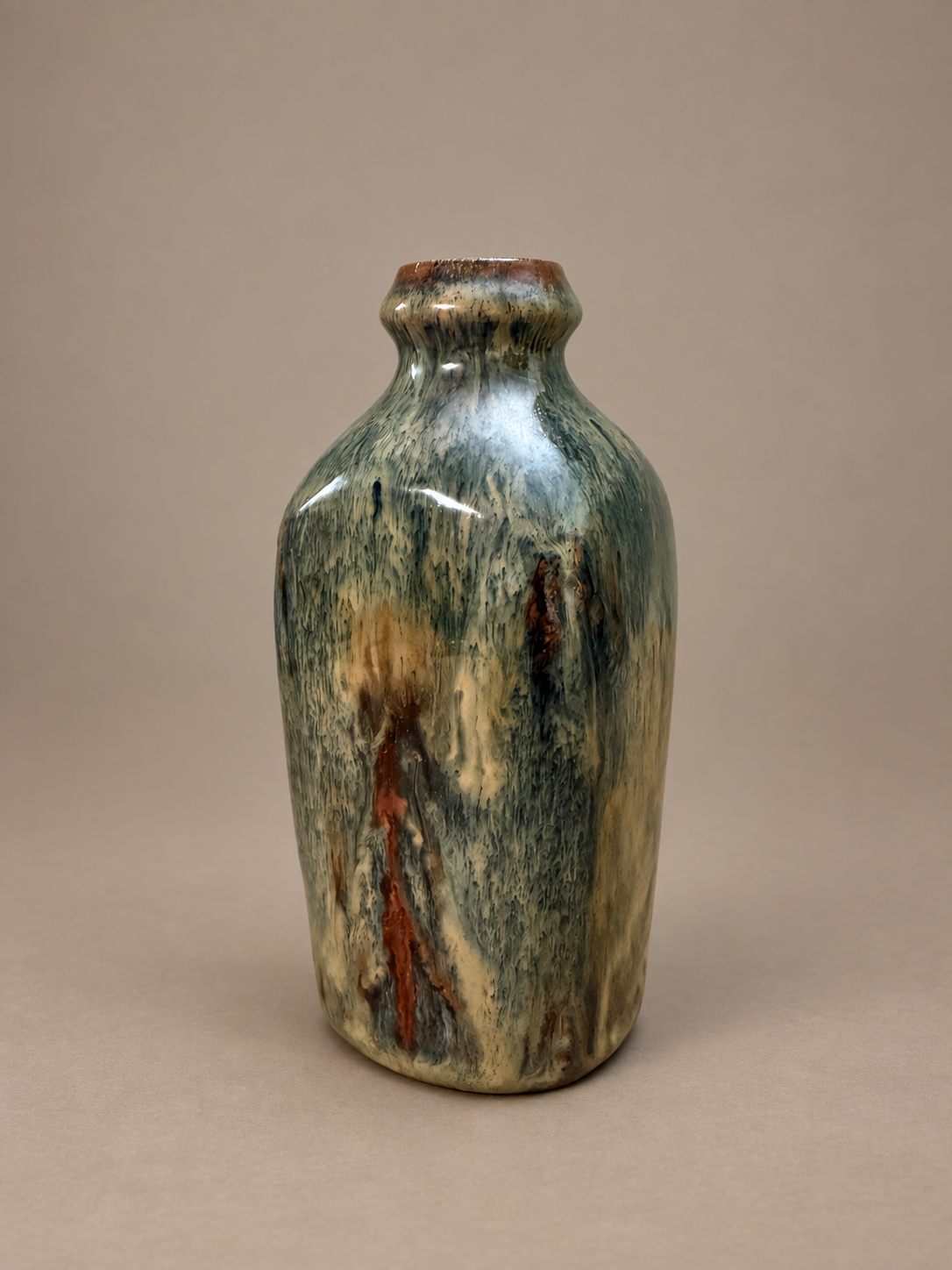
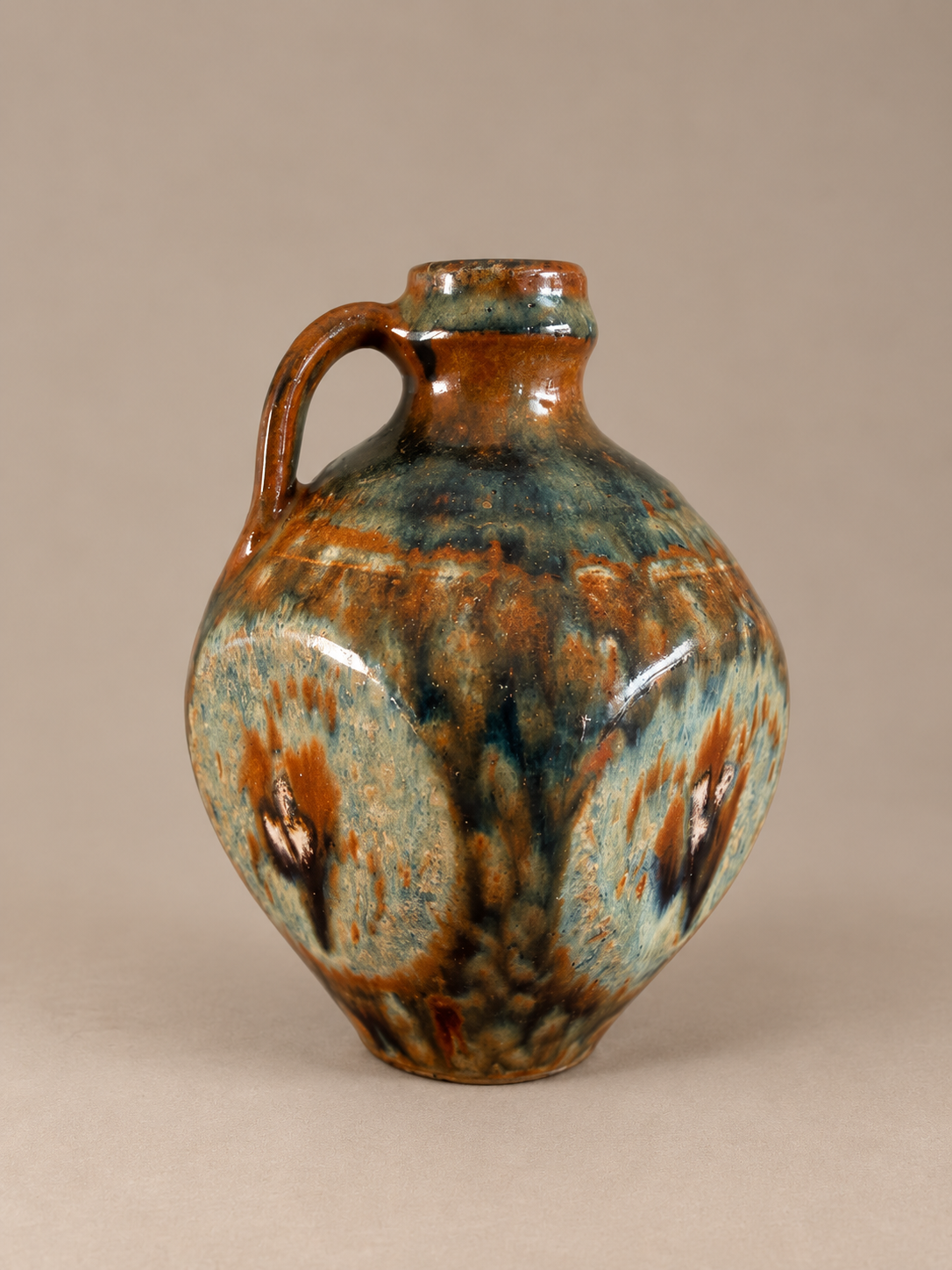
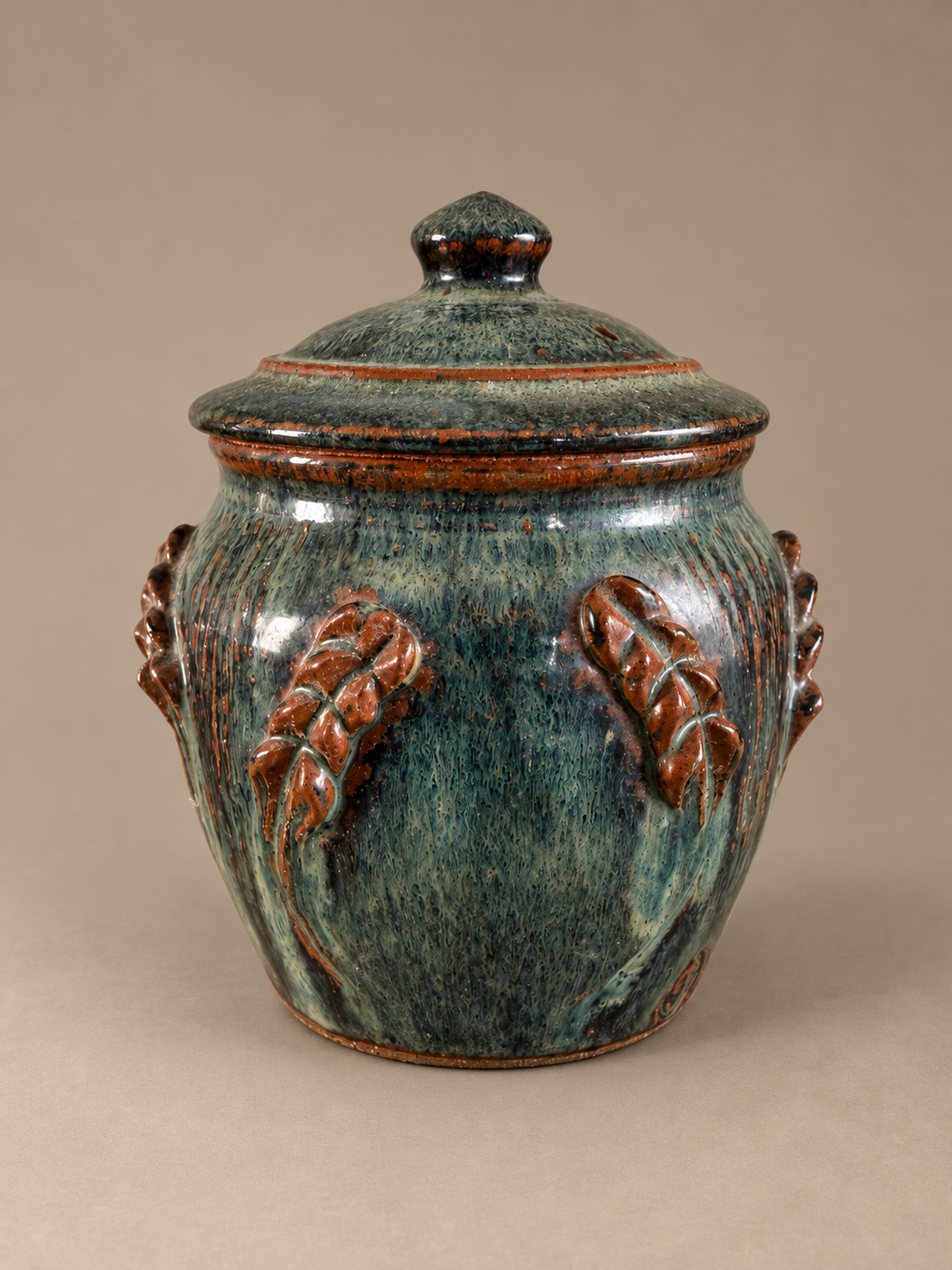
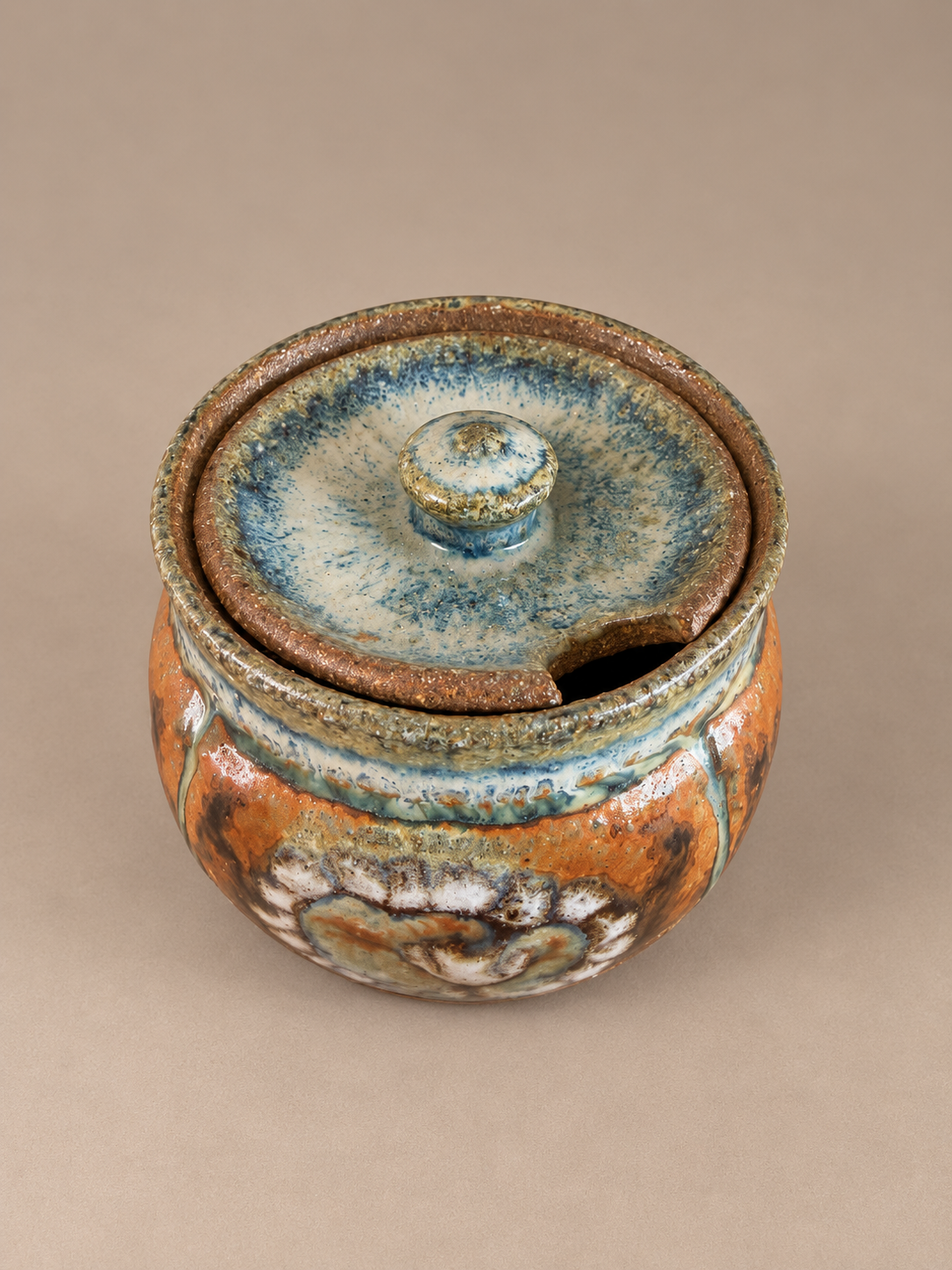
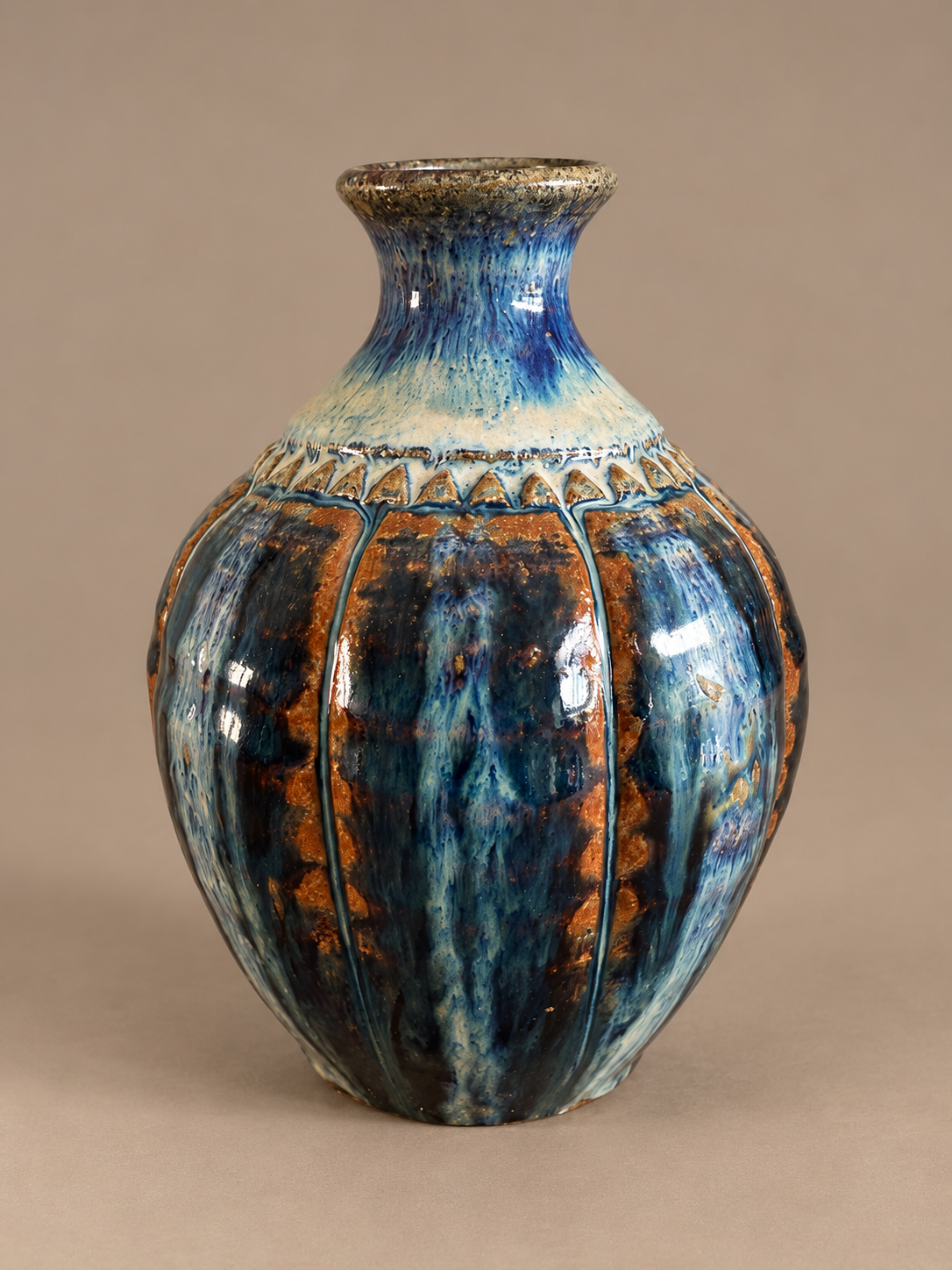
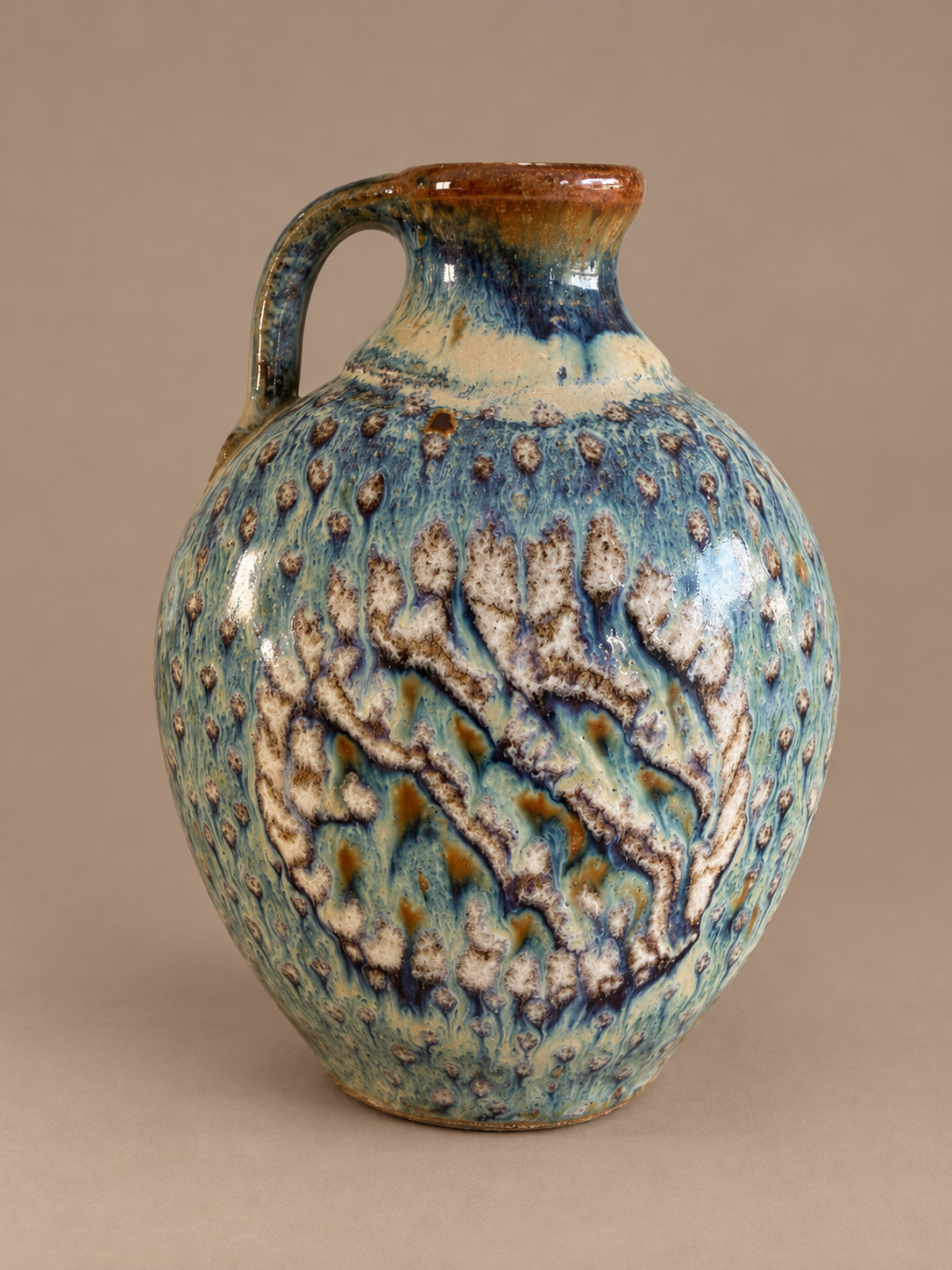
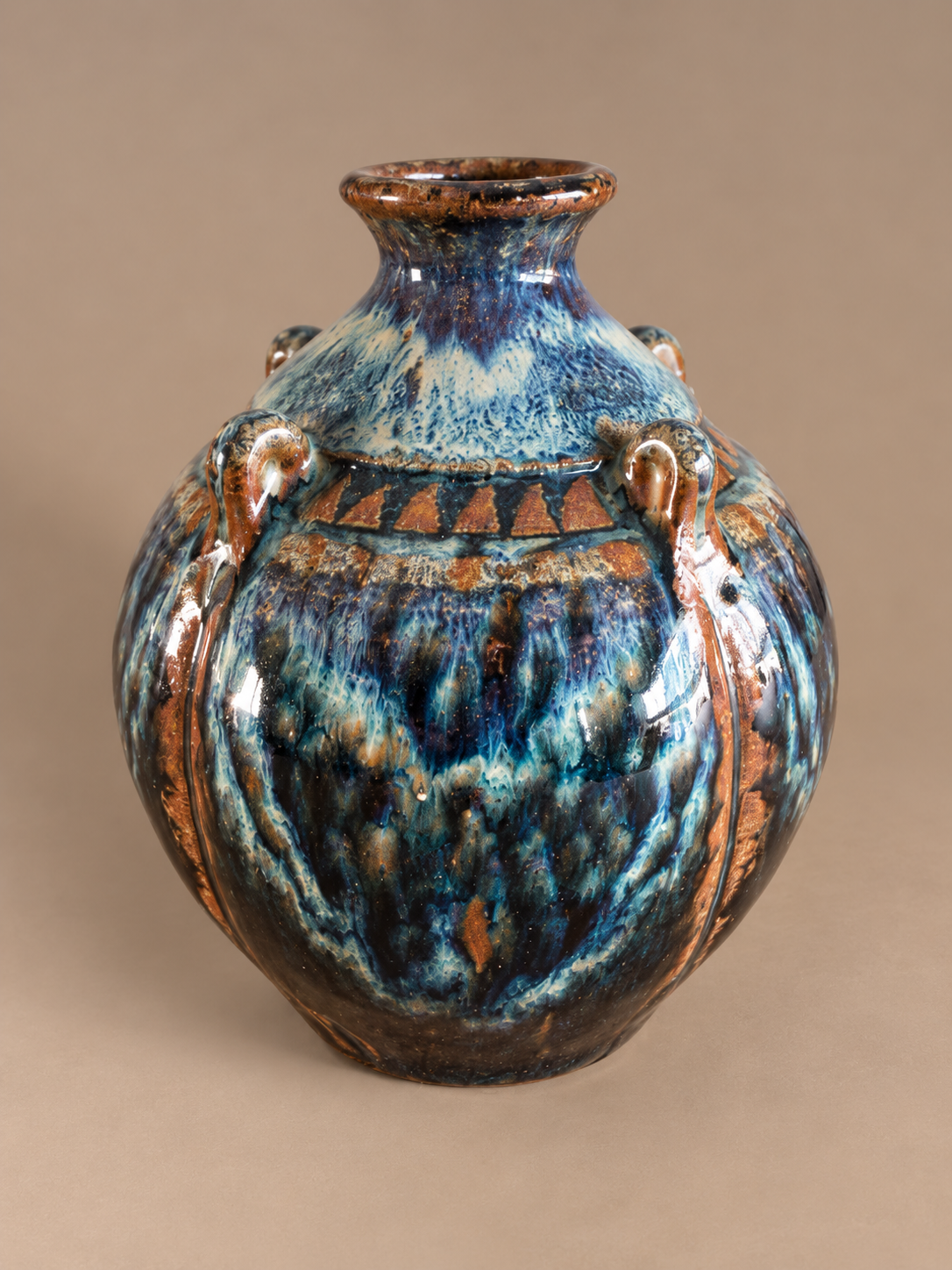
I adore her work. Blues and greens mingle with earthy browns, while ridges, flattened sides and raised decoration give the colour somewhere interesting to settle. There’s so much to enjoy in the way the glazes move across the surface, picking out an edge or gathering around a raised detail.
What’s behind those glazes?
Clarke worked in stoneware, a durable ceramic material fired at high temperatures. Gas and wood firing formed part of her practice, and on a surviving maker’s card she described the luminous colours achieved through the unpredictability of the process.
Firing permanently transforms the clay, and the results aren’t always entirely controllable. Those uncertainties can bring unexpected colours and surface effects, which are part of what makes pottery so interesting to look at. Looking at Clarke’s work, you can see why she made a point of mentioning them.
The surfaces are wonderfully varied. To my eye, those earthy combinations have something of weathered stone, water and lichen about them, which probably explains why I like them alongside timber, books and other natural textures. They look very much at home without needing an entire shelf carefully styled around them.
These pieces encourage you to pick them up and turn them around, which makes “just having a quick look” a slightly optimistic description.
My collection
I do love all my children, but in my Clarke collection I also have favourites.
There’s a blue and rust ribbed vase that I think just pops against teak and, I must admit, may find its way back into my living room. The colours work beautifully with the warmth of the wood, and the ribbing gives you even more of those little changes in glaze to admire.
Then there’s the trinket box with the cone-shaped lid, which I have a real soft spot for. Just gorgeous, and quite capable of persuading me that I need another small box despite having absolutely no idea what I’d put in it.
For now, they’re part of the collection at Flippin’ Lovely, although writing about my favourites probably isn’t helping me part with them.
A little factoid: What does “studio pottery” actually mean?
Studio pottery describes ceramics made by individual potters, or small teams, working in their own studios and workshops. It developed as a distinct artistic practice in the early twentieth century, with an emphasis on the individual maker’s involvement in the finished object. It can include everyday tableware, decorative vessels and sculpture.
That individual involvement does not mean every piece has to be wildly different. A potter might return to a favourite bottle shape or make a series of similar jars, while small differences in the making and finishing give each one its own character. This individuality is an important feature of studio ceramics, including pieces produced repeatedly by hand.